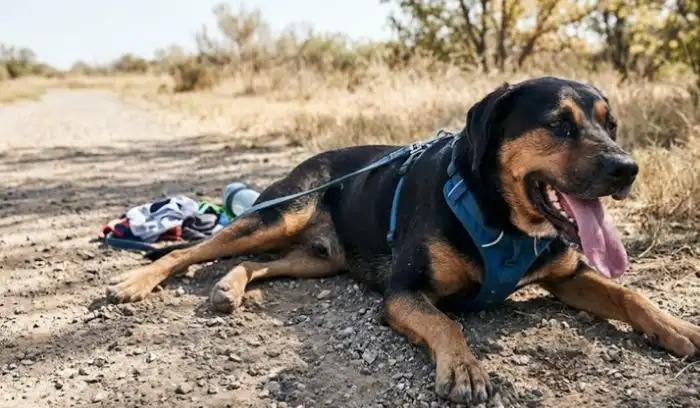
My dog almost died on a hike last summer. It was only 75 degrees. But he was running hard in direct sun. Then he just lay down on the trail and would not get up. His gums were bright red. His tongue was huge. I carried him to the car and rushed him to the vet. They said it was heat exhaustion. Ten more minutes and it would have been heat stroke.
That day I learned how to recognize heat exhaustion in dogs. It is not always obvious. It does not always happen on scorching days. But it can turn deadly fast. Let me show you what to look for.
What Is Heat Exhaustion in Dogs?
Dogs do not sweat like us. They cool down by panting. That is it. So when the air is hot and humid, panting does not work well. Their body temperature rises and it keeps rising.
- There is a spectrum here. Heat stress. Heat exhaustion. Heat stroke. They are not the same thing. But they are connected. Heat exhaustion comes first. Heat stroke comes next and heat stroke can kill.
- Heat stress is the mildest form. Your dog is hot. They are panting. They are thirsty but they are still aware and moving .
- Heat exhaustion is worse your dog is weak. They are panting heavily. They might not be able to move. They are still mentally aware, but they are too tired to react .
- Heat stroke is the most severe. The body has lost the ability to cool itself. Organs start to fail. The dog may collapse, seizure, or become unresponsive. This is a life-threatening emergency .
The line between heat exhaustion and heat stroke is thin. And that is why you need to act fast.
Read More: Symptoms of Poor Gut Health in Dogs and Natural Remedies
How to Recognize Heat Exhaustion in Dogs: The Early Signs?
The first signs are easy to miss. That is the problem. Many owners only notice when things are already serious .
Watch for these:
- Excessive panting. More than normal. Even when they are resting. This is often the first sign .
- Lying down during activity. If your dog suddenly stops and refuses to get up, that is a red flag .
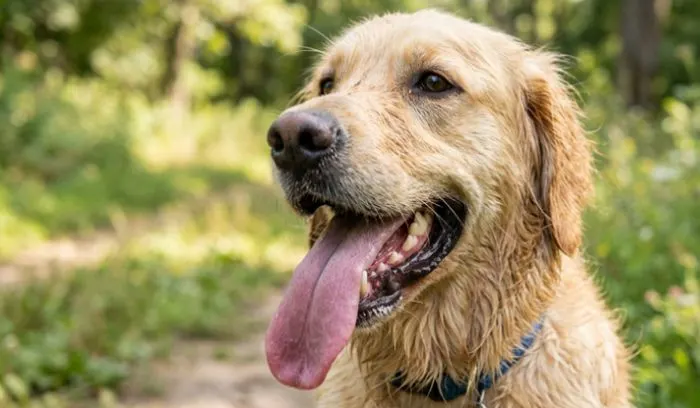
- Bright red gums. Look inside their mouth. Gums should be pink. Bright red means they are overheating. Pale or bluish is even worse .
- A wide, dark tongue. An overheated dog tongue looks different. Wider. Longer. Darker than usual .
- Weakness and stumbling. They might look drunk. Wobbly. Uncoordinated .
- Glazed eyes. They look distant. Not focused .
- Drooling more than usual. Heavy drooling can be a sign of distress .
- Vomiting or diarrhea. This can happen as the body struggles .
If you see any of these, stop everything. Get your dog out of the heat. Start cooling them down. Do not wait to see if they get better on their own.
Heat Stroke vs Heat Exhaustion in Dogs: What Is the Difference?
This is where things get serious. Heat exhaustion is a warning. Heat stroke is the disaster.
Here is the simplest way to think about it. Heat exhaustion means the body is struggling but still fighting. Heat stroke means the body has given up.
Heat Exhaustion:
- Weakness
- Heavy panting
- Difficulty moving
- Still mentally aware
- Body temperature rising but not yet critical
Heat Stroke:
- Collapse
- Seizures
- Unresponsiveness
- Bloody diarrhea or vomiting
- Body temperature at 104°F or higher
- Organ failure
Heat stroke happens when the body temperature reaches about 105°F or higher . At that point, the proteins in the body start to break down. Organs stop working. The brain swells. This can happen in under an hour .
One vet said it best. Heat exhaustion is the precursor. If you do not fix it, it becomes heat stroke .
Stages of Heat Stroke in Dogs
There is a clinical grading system for heat-related illness in dogs. It helps vets decide how serious things are. But you can use it too. To know when to panic.
- Stage I (Mild):
Your dog is lethargic. A little stiff. Panting heavily. But still conscious and aware . - Stage II (Moderate):
Vomiting or diarrhea (no blood). Excessive drooling. Collapse that comes and goes. Maybe one seizure . - Stage III (Severe):
This is the danger zone. Central nervous system problems. Ataxia (stumbling). Multiple seizures. Unresponsive. Coma. Organ damage. Bleeding in the gut .
Stage III is where dogs die. Even with treatment, the mortality rate for severe heat stroke is high. Some studies say 37 to 57 percent . That is why catching it early matters so much.
First Signs of Heat Stroke in Dogs: When to Rush to the Vet
Do not try to treat heat stroke at home. You cannot. Your job is to cool your dog down while you get them to the vet.
These are the signs that mean go now:
- Collapse or inability to stand
- Seizures
- Unresponsiveness
- Bloody diarrhea or vomit
- Body temperature over 104°F
- Blue or pale gums
If you see any of these, call your vet. Tell them you are coming. Then start cooling your dog on the way.
You May Also Read: Best Canine Fitness Exercises for Beginners
Heat Stroke in Dogs Treatment at Home: What to Do Before the Vet
You cannot cure heat stroke at home. But you can save your dog's life while you get them to the vet.
Here is what to do.
- Move them out of the heat. Shade. Air conditioning. A fan. Anything cooler than where they are .
- Use cool water. Not cold. Not ice. This is important. Ice and ice-cold water cause blood vessels to constrict. That traps heat inside the body. It makes things worse . Use cool water from a hose or a bottle.
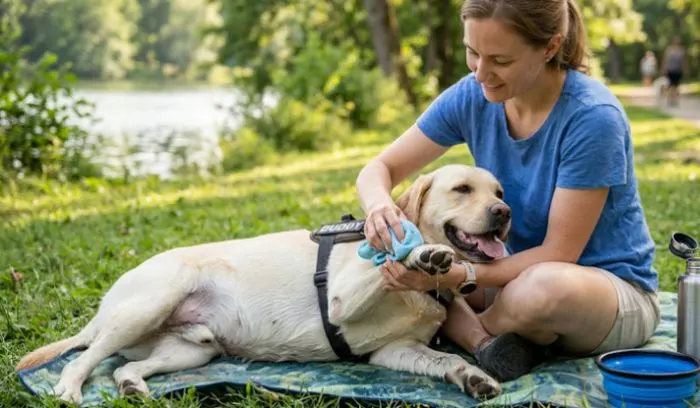
- Wet their body. Focus on the belly, armpits, paws, and the inside of the ears. These areas have a lot of blood flow. Cooling them cools the whole body .
- Use a fan. Airflow helps water evaporate. That cools the dog faster .
- Offer water to drink. Only if they are fully alert. Do not force it. Do not let them gulp huge amounts. Small sips .
- Do not cover them with wet towels. This traps heat. It prevents evaporation. Just keep the water flowing and the air moving .
- Check their temperature if you can. A rectal thermometer is the only accurate way. Normal is 99.5 to 102.5°F. Stop cooling when they reach 103°F. Going lower can cause hypothermia .
- Go to the vet. Even if they seem better. Internal damage can still be happening. The vet needs to monitor them .
How to Prevent Heat Exhaustion in Dogs?
I learned my lesson the hard way. Now I am careful. Here is what I do.
- Walk early or late. Not in the middle of the day. The pavement gets hot. The sun is strong. Early morning and evening are safer .
- Bring water. Always. For you and your dog. Offer it often .
- Know your dog's risk. Flat-faced breeds like bulldogs and pugs struggle to breathe. They overheat faster. Thick-coated breeds like huskies trap heat. Large breeds like Great Danes are also at risk. Older dogs and puppies are more vulnerable too .
- Never leave them in a car. Not even for a minute. Not even with the windows cracked. The inside of a car can reach 120°F on a warm day .
- Watch for the signs. Do not push your dog to keep going if they seem tired. They will try to please you. They will keep going until they collapse. You have to be the one who stops .
One Final Piece of Honest Advice
I almost lost my dog because I did not know what heat exhaustion looked like. I thought he was just tired. I thought he would be fine. I was wrong.
Learn the signs. Watch your dog closely on warm days. Do not push them. And if something feels off, trust your gut. Stop. Cool them down. Call the vet.
The difference between heat exhaustion and heat stroke is minutes. Do not waste them.
Quick Recap
- Heat exhaustion comes before heat stroke. It is a warning.
- Signs include excessive panting, bright red gums, weakness, and lying down during activity.
- Heat stroke is when the body fails. Collapse, seizures, and unresponsiveness are emergencies.
- Cool with cool water, not ice. Use a fan. Focus on the belly and paws.
- Get to the vet immediately if you suspect heat stroke.
- Prevent it by walking at cool times, bringing water, and knowing your dog's risk.
Your dog depends on you to keep them safe. Now you know how.
FAQs
1. How do I know if my dog has heat exhaustion or just needs water?
Look at their gums. Bright red is a warning sign. Also watch for weakness. If they lie down and refuse to move, that is not normal tiredness. My dog did that on a hike. He would not get up. That is when I knew something was wrong.
2. Can heat exhaustion happen on a cool day?
Yes. I learned this the hard way. It was only 75 degrees when my dog overheated. But we were in direct sun. He was running hard. The temperature does not tell the whole story. Humidity matters. Sun exposure matters. Your dog's breed matters. So watch your dog, not just the thermometer.
3. Should I use ice to cool my dog down?
No. Never use ice. Ice makes blood vessels shrink. That traps heat inside. Use cool water instead. Wet their belly. Their paws. Their armpits. Use a fan. That is what works.