Bringing a dog into a home with kids is a big step. You want the dog to be kind. You want the dog to be calm. You want the dog to be safe around your child. This is not hard to do. But it takes time. It takes watching the dog. It takes teaching the dog the right way.
This article will show you how to train a dog to be gentle with kids. You will also learn the signs a dog is uncomfortable with a child. And you will learn how to desensitize a dog to kids. Let us start.
Why Being Gentle Matters?
A dog does not know that a child is small. A dog does not know that a child can get hurt easily. A dog only knows how it feels. If the dog feels scared, it might snap. If the dog feels too excited, it might jump. A jumping dog can knock a child down. A scared dog can bite.
But a gentle dog is different. A gentle dog knows how to be soft. A gentle dog does not push. A gentle dog walks away when it needs space. Teaching this keeps everyone safe. It also helps the dog feel less stressed.
Read More: Basic Obedience Training for Dogs: A Simple and Complete Guide
Signs a Dog Is Uncomfortable With a Child

Before you train your dog to be gentle, you need to know when your dog is not okay. Many people miss these signs. Then the dog bites. Then the family is sad. Do not let this happen to you.
Here are the clear signs a dog is uncomfortable with a child. Watch for these every time your dog is near a child.
The Dog Turns Its Head Away
When a child comes close, the dog looks away. This is not the dog being rude. This is the dog saying "I do not want this." The dog is trying to be polite. But the child may not understand. You must understand.
The Dog Shows the White Part of Its Eyes
This is called whale eye. The dog looks at the child from the side. You see the white part of the eye. This means the dog is worried. It is not a gentle moment. It is a warning.
The Dog Yawns When Not Tired
Dogs yawn when they are calm. But dogs also yawn when they are stressed. If a child is near and the dog yawns many times, the dog is not okay. The dog is asking for space.
The Dog Licks Its Lips
No food is near. But the dog licks its lips again and again. This is a quiet sign of fear. Many parents miss this. Do not miss it.
The Dog Freezes
The dog stops moving. The dog goes stiff. This is a very serious sign. A frozen dog is about to bite or snap. If you see this, take the child away right then.
The Dog Tucks Its Tail
A happy dog has a loose tail. A scared dog tucks its tail down or between its legs. If the tail is low and still, the dog is not gentle. The dog is scared.
The Dog Hides Behind You
The dog moves away from the child. The dog puts you between itself and the child. This means the dog does not feel safe. Do not force the dog to stay. Let the dog leave.
These signs are your first help. If you see any of these, stop the meeting. Give the dog a break. Then start training from a farther distance.
How to Desensitize a Dog to Kids?
Desensitize is a big word but it has a simple meaning. It means you teach the dog that kids are not scary. You do this slowly. You do this without forcing the dog.
Many people rush this step. Then the dog gets worse. Then the dog bites. Slow is fast here. Slow is safe. Follow these steps exactly.
Step One: Keep Distance
At the start, the dog and the child should not touch. They should not even be in the same room. Put the dog in a pen or behind a baby gate. Let the child walk past from far away. The child does not look at the dog. The child does not talk to the dog. The child just walks.
When this happens, give the dog a treat. Do this ten times. If the dog stays calm, you are ready for the next step.
Step Two: Shorter Distance
Now let the child come a little closer. Still behind the gate. Still no touching. Still no eye contact from the child. Every time the child walks by, give the dog a treat. The dog will start to think "child near me means good things happen."
Do this for two days. Do ten to fifteen tries each day.
Step Three: Child Talks Softly
Now the child can say one soft word. The child says "good dog" in a quiet voice. Then the child walks away. Give the dog a treat right after the child speaks. The dog learns that a child's voice is not scary. It is just a sound before a treat.
Step Four: No Barrier
Now remove the gate. But keep the dog on a leash. The leash is not to pull the dog. The leash is to stop the dog from jumping. The child stands still. The dog looks at the child. Give a treat. The child takes one step closer. Give a treat. The child takes one step back. Give a treat.
If the dog shows any sign of fear from the list above, go back one step. There is no rush.
Step Five: The Child Gives a Treat
Now the child holds a treat. The child drops the treat on the floor near the dog. The child does not reach for the dog. The child does not pet the dog. The child just drops the treat and steps back. The dog eats the treat. This builds a good link between the child and good things.
Do this ten times. Then wait one day. Do it ten more times.
Step Six: The Child Pets the Dog
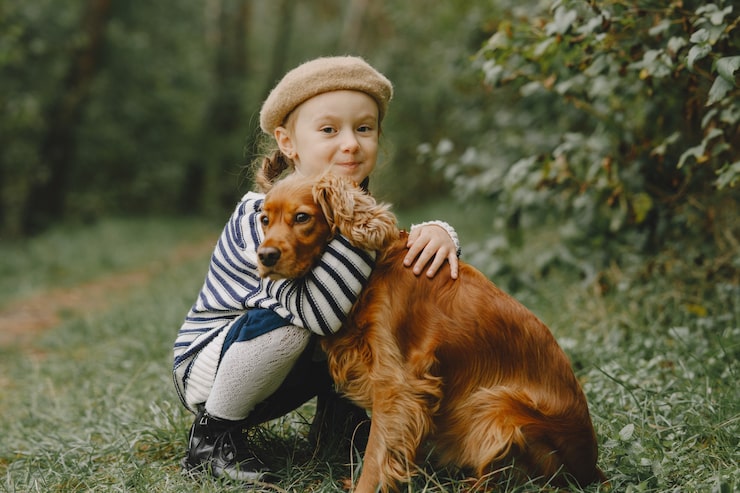
This is the last step. And it is a very careful step. The child pets the dog on the back or the chest. Not on the head. Many dogs do not like head pets from kids. The child uses one soft hand. The child pets for two seconds. Then the child stops. Give the dog a treat. Then the child walks away.
If the dog stays soft and loose, you did it. If the dog shows any fear sign, go back to step five for three more days. This whole process can take two weeks. It can take one month. That is fine every dog learns at its own speed.
You May Also Read: Leash Training: A Step-by-Step Guide to Walking Your Dog with Confidence
How to Train a Dog to Be Gentle With Kids?
Now your dog is not scared of kids. That is good. But not scared is not the same as gentle You need to teach the dog how to act around kids. Here are the main skills your dog needs to learn.
Teach the Dog to Sit Before Greeting
Dogs like to jump up. They want to see the child's face. But a jumping dog can hurt a child. Teach your dog to sit when a child comes near.
Here is how. Have the child walk toward the dog. Before the dog jumps, say "sit." If the dog sits, the child gives a treat. If the dog jumps, the child walks away. The dog will learn that jumping makes the child leave. Sitting makes the child stay and give a treat.
Do this twenty times. Then try it in different rooms. Then try it outside. The dog should sit every time a child comes close.
Teach the Dog to Take Treats Softly
Some dogs snap at treats. They are not mean. They are just fast. But a fast mouth can bite a child's finger by mistake.
Put a soft treat on a flat hand. If the dog grabs hard, close your hand. No treat. Try again. Only give the treat when the dog takes it with a soft mouth. Do this for one week. Then let the child do it with your hand over the child's hand.
Teach the Dog to Move Away
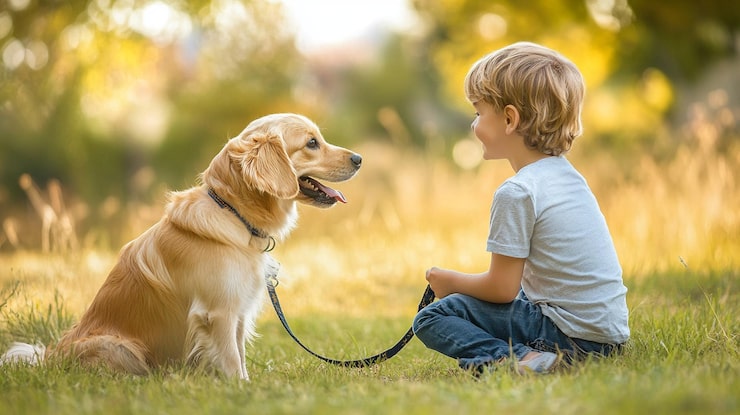
A gentle dog knows when to leave. Teach your dog the word "place." Point to a bed or a mat. Say "place." The dog goes there. The dog stays there. Then the child can walk by without the dog following.
This is very useful. If the dog seems tired, you say "place." The dog rests away from the child. The child stays safe. The dog stays calm.
Teach the Child to Be Gentle Too
Training is not only for the dog. You must also train the child. Teach your child these rules.
- No pulling the dog's tail or ears
- No hugging the dog around the neck
- No waking the dog when it sleeps
- No taking the dog's food or toy
- No running toward the dog
Tell your child that the dog has feelings too. The dog gets tired. The dog gets scared. When the dog walks away, the child lets the dog go.
A Daily Practice Plan for You
You do not need hours each day. You just need ten minutes. Here is a simple plan.
Morning: The child gives the dog one soft treat. The dog sits first. The child says "good gentle." This takes one minute.
Afternoon: Practice "place" for three minutes. The child walks past the dog three times. The dog stays on its mat.
Evening: Watch for signs of fear for two minutes. If you see no signs, give the dog a chew toy near the child. If you see a sign, practice distance work the next day.
Do this every day for three weeks. Most dogs become much gentler by then.
What Not to Do?
Some old training ways do not work. Some ways make the dog worse. Do not do these things.
Do not punish the dog for growling. A growl is a warning. If you punish the growl, the dog will bite with no warning next time. Thank the growl. Then move the child away.
Do not hold the dog still for pets. This makes the dog feel trapped. A trapped dog will fight. Always let the dog leave if it wants.
Do not let the child chase the dog. Chasing makes the dog scared. The dog may turn and snap. Teach the child to stand still and call the dog softly.
Do not leave the dog and child alone. Not for one minute. Not even if the dog seems gentle. An adult must watch every time. Most bites happen when an adult looks away for just a second.
When to Get Help?
Sometimes you need a helper. A dog trainer who uses gentle ways can help you. Get help if you see these things.
- The dog has bitten or snapped at a child
- The dog growls every time a child comes near
- The dog hides all day and will not come out
- You tried the steps above for three weeks and nothing changed
A good trainer will watch your dog and child. They will make a plan for your home. This is not failure. This is being a responsible pet owner.
A Quick List of Key Points
Here is a short list to remember.
- Watch for signs of fear like head turns, lip licks, and freezing
- Keep distance at first when teaching the dog about kids
- Let the child give treats from a safe distance
- Teach the dog to sit before the child comes close
- Teach the child to be soft and slow with the dog
- Never leave the dog alone with the child
- Go slow, Slower is safer.
Conclusion
Training a dog to be gentle with kids is not magic. It is just watching and teaching. You look for the signs a dog is uncomfortable with a child. You see the tail tuck. You see the lip lick. Then you stop and give the dog space. That is the most important thing.
Then you teach slowly. You learn how to desensitize a dog to kids step by step. You keep distance first. You let the child give treats. You wait days or weeks. You do not rush. Rushing makes the dog scared. Scared dogs bite. But slow dogs learn to feel safe.
A gentle dog changes your home. The child can play. The dog can rest. No one gets hurt. No one gets yelled at. It takes work from you. It takes work from the child too. The child must learn to be soft. The child must learn to see the signs. But when both try, it works.
Start today. Pick one sign from the list and watch your dog for one minute. Then pick one step from the desensitization list. Do just that step for two days. Then do the next step. Before you know it, your dog will be gentle with your kids. And your kids will be safe with your dog. That is the whole goal.
FAQs
1. How long does it take to train a dog to be gentle with kids?
It takes most families two to four weeks. Some dogs learn faster. Some dogs need more time. The signs a dog is uncomfortable with a child will tell you if you are going too fast. If you see fear signs, slow down. Do not count days. Count how calm the dog looks.
2. What is the first thing I should teach my child about the dog?
Teach your child to never hug the dog. Kids love to hug. But most dogs do not like hugs. Hugs make the dog feel trapped. A trapped dog shows signs a dog is uncomfortable with a child like freezing or looking away. Tell your child to pet the dog on the back only. And only pet for two seconds. Then stop.
3. My dog growls at my child. What do I do?
Do not punish the growl. A growl is the dog telling you it is scared. Thank the growl. Then put the dog in another room. Then learn how to desensitize a dog to kids starting from very far away. If you punish the growl, the dog will bite with no warning next time. That is much more dangerous.
4. Can an old dog learn to be gentle with kids?
Yes. Old dogs can learn. But old dogs may have sore joints. A child pulling or hugging can hurt them. So an old dog may show signs a dog is uncomfortable with a child faster than a young dog. Go even slower with an old dog. Use more treats. Keep meetings very short. And always let the dog walk away.
5. Should I get rid of my dog if it shows fear signs?
No. Fear signs are not bad. Fear signs are information. They tell you your dog needs help. Most dogs can learn how to desensitize a dog to kids and become gentle. Only think about rehoming if the dog has bitten hard more than once or if you tried training for two months and nothing changed. Most dogs just need more time and slower steps.