My dog would not go near the front door. She shook when I picked up her leash. I tried everything I read online. Nothing worked. I felt like a bad owner. Then I stopped trying to fix her and started listening to her. That is when things changed.
I learned how to train an anxious dog at home by just paying attention. Not pushing. Not forcing. Just being there. It took time. A lot of time. But she came around. Now she walks with her tail up. She sleeps through the night. She is a different dog. If your dog is scared all the time, do not lose hope. You can help them. I did. And I am no expert. Just someone who refused to give up.
Why Is My Dog So Anxious?
First thing you need to understand. Your dog is not being difficult on purpose. They are scared. Fear is not a choice.
- Some dogs are born nervous. It is in their genes. Other dogs become anxious because of bad experiences. Abuse. Neglect. A scary event. Some dogs develop anxiety after a traumatic experience like a car accident or a loud noise.
- Change can also trigger anxiety. A new home. A new person. A new schedule. Dogs like routine. When their routine changes, they get stressed.
- Pain can also cause anxiety. Dogs hide pain well. But they show it through behavior. A dog in pain might act scared or aggressive.
- So before you start training, talk to your vet. Rule out medical issues. Make sure your dog is healthy. Then start working on the anxiety.
Read More: How to Train a Dog to Be Gentle With Kids
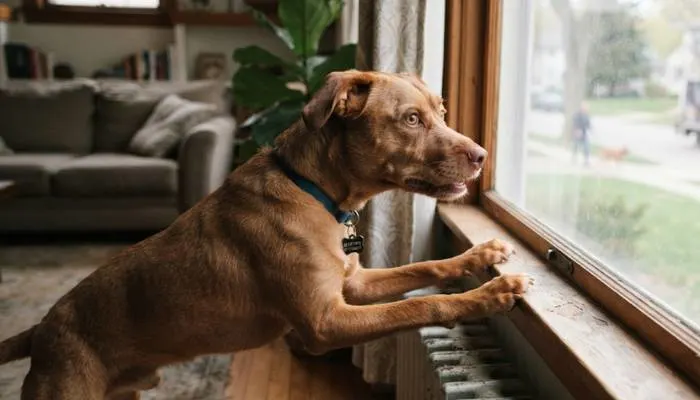
How to Train an Anxious Dog at Home?
Training an anxious dog is different from training a confident dog. You cannot use the same methods. You cannot push them. You cannot punish them.
Here is what works.
- Go slow. Do not rush your dog. They need time to feel safe. A scared dog cannot learn. They are in survival mode. So go at their pace. If they are not ready, wait.
- Use positive reinforcement. Reward calm behavior. Give treats when your dog stays relaxed. Give praise when they are brave. Never punish fear. That makes it worse.
- Keep sessions short. Five minutes is enough. Do not push for longer. Anxious dogs get tired easily. Their brains work hard when they are scared. Short sessions keep them from getting overwhelmed.
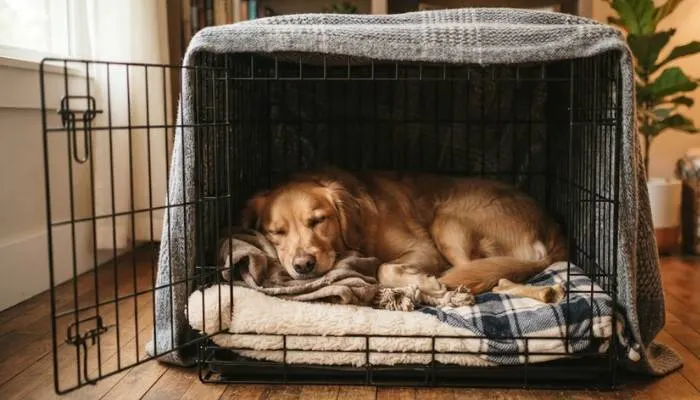
- Create a safe space. Give your dog a place to hide when they are scared. A crate with a blanket over it works great. A quiet corner with a bed works too. Let them go there whenever they need to.
- Be consistent. Do the same things every day. Same feeding times. Same walk times. Same training times. Routine makes dogs feel safe.
How to Calm a Dog Down from Anxiety?
When your dog is in the middle of an anxiety attack, do not try to train. Just calm them.
Here is what works.
- Stay calm yourself. Dogs read your energy. If you are tense, they get more tense. Take deep breaths. Stay relaxed. Your calmness helps them calm down.
- Do not comfort too much. I know this sounds wrong. But hear me out. When you baby a scared dog, you are telling them there is something to be scared of. Stay near them. Speak softly. But do not overdo the comforting.
- Use gentle touch. Some dogs like being held. Others do not. Pay attention to your dog. If they lean into you, pet them. If they pull away, give them space.
- Distract them. A toy can help. A treat can help. Something that takes their mind off the scary thing. Get them to play. Get them to focus on something else.
- Remove the trigger. If you can, take them away from what is scaring them. Carry them to another room. Close the door. Block the noise. Sometimes that is all they need.
How to Train an Anxious Dog to Be Alone?
Separation anxiety is one of the hardest things to deal with. Your dog panics when you leave. They bark. They chew. They destroy things.
Here is how to fix it.
- Start small. Leave your dog alone for just a few seconds. Step out of the room. Come right back. Do this over and over. When they stay calm, reward them.
- Increase time slowly. Add a minute at a time. Leave for one minute. Then two. Then five. Never go faster than your dog can handle.
- Do not make a big deal about leaving. Do not say goodbye dramatically. Do not make a big fuss when you come back. Keep it boring. The less attention you give to leaving, the less your dog will stress about it.
- Give them something to do. Leave a chew toy. Leave a puzzle filled with treats. Something that keeps their brain busy. A busy dog is not a stressed dog.
- Leave a shirt that smells like you. Your scent is comforting. Leave an old shirt on their bed. They will feel close to you even when you are gone.
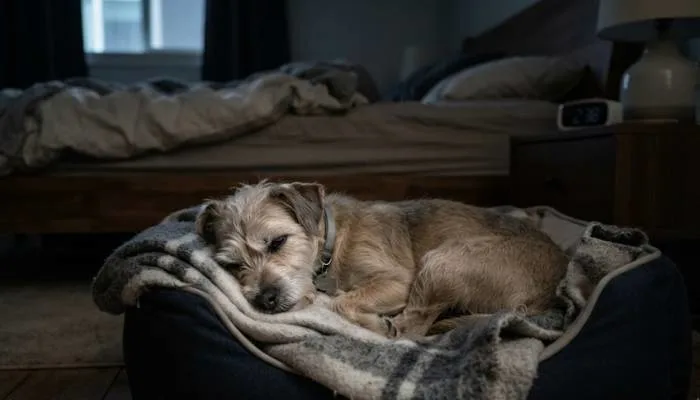
How to Calm an Anxious Dog at Night?
Nighttime is tough for many anxious dogs. They cannot see well. They hear strange sounds. They feel alone.
Here is how to help them settle.
- Create a bedtime routine. Do the same things every night. A walk. A treat. A cuddle. Then bed. Routine tells your dog it is time to sleep.
- Keep the room dark and quiet. Cover the windows. Turn off the TV. Quiet is calming. A quiet room helps them relax.
- Play white noise. A fan works. A white noise machine works. Nature sounds work. These sounds cover up outside noises that might scare them.
- Give them a bed they feel safe in. A crate with a blanket works great. A soft bed with high sides works too. Something that feels like a den. Dogs feel safe in small spaces.
- Stay with them until they fall asleep. Sit next to them. Pet them gently. Let them know you are there. Once they are asleep, you can leave.
You May Also Read: Basic Obedience Training for Dogs: A Simple and Complete Guide
How to Train an Anxious Dog to Walk?
Walking an anxious dog can be a nightmare. They pull. They freeze. They try to run home.
Here is how to make walks easier.
- Start in the house. Walk your dog around the living room. Around the yard. Get them comfortable on the leash before you hit the street.
- Choose quiet times. Walk early in the morning or late at night. Fewer people. Fewer dogs. Less to be scared of.
- Let them set the pace. Do not drag your dog. Let them stop and sniff. Let them look around. The more they explore, the more confident they get.
- Use treats. Reward your dog for walking. Reward them for staying calm. Treat them when they pass a scary thing without reacting.
- Turn around when needed. If your dog is scared, turn around. Go back home. Do not force them to keep walking. You want walks to be positive. If they are scared, it is not a positive experience.
- Keep it short. A five-minute walk is fine. You can build up to longer walks over time. Do not push for distance. Push for comfort.
Training Tools That Help Anxious Dogs
Some tools make training easier. Here is what I use.
- A gentle leader. This goes over your dog's nose. It gives you control without pulling. Great for dogs that pull on walks.
- A harness. A back-clip harness lets your dog feel less pressure. Good for dogs that are sensitive to collars.
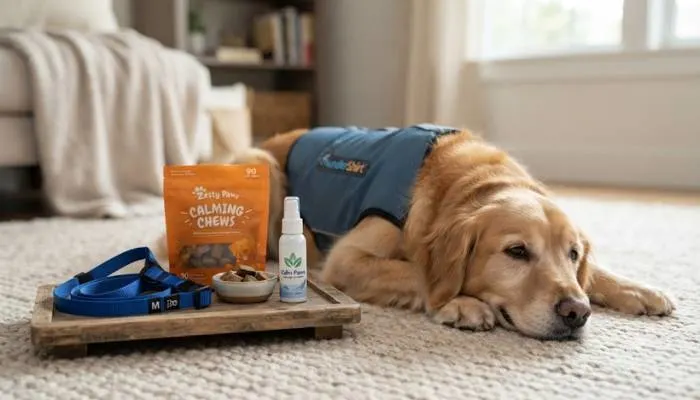
- Calming treats. These have natural calming ingredients. Chamomile. L-tryptophan. They help take the edge off. Check with your vet first.
- Calming collars. These release pheromones. They smell like a mother dog. Very calming for anxious dogs.
- Anxiety vests. These apply gentle pressure. Like a constant hug. Many anxious dogs respond well to them.
Natural Calming Methods That Work
You do not always need supplements. Some natural methods work really well.
- Exercise. Tired dogs are less anxious. A good run burns off stress. Exercise releases feel-good chemicals in the brain.
- Massage. Gentle massage helps dogs relax. Stroke their back. Rub their ears. Keep it gentle.
- Music. Soft classical music works. There are even playlists made for dogs. Very effective for calming anxious dogs.
- Essential oils. Lavender and chamomile are calming. But be careful. Some oils are toxic to dogs. Use dog-safe oils only.
- Bonding time. Spend time with your dog. Just being near you is calming. Watch TV together. Read a book while they sleep next to you. Your presence helps.
What Not to Do with an Anxious Dog
I made all these mistakes. Learn from me.
- Do not punish fear. This is the worst thing you can do. Your dog is scared. Punishment makes them more scared. It breaks their trust.
- Do not force them. Do not drag them into situations they are scared of. Do not push them. Respect their limits.
- Do not yell. Yelling makes anxiety worse. It makes everything worse. Stay calm. Speak softly.
- Do not ignore their anxiety. That does not help. Acknowledge it. Work with it. Help them through it.
- Do not give up. Training an anxious dog takes time. Months sometimes. Do not quit. Your dog needs you.
When to Get Professional Help?
Sometimes home training is not enough. Here is when to call a professional.
- Your dog is a danger to themselves. They hurt themselves from anxiety. They chew through crates. They break windows. They are a risk to their own safety.
- Your dog is a danger to others. They bite out of fear. They snap at strangers. They are a danger to you or other people.
- You have tried everything. You have been consistent. You have been patient. Nothing helps. Time to get extra help.
- Your dog is not improving. They have been on medication. They have been training. No change. Time for a professional.
A certified trainer can help. A veterinary behaviorist can help. Do not feel bad asking for help. Sometimes you need it.
One Final Piece of Honest Advice
I have been where you are. Sitting on the floor next to a scared dog. Wondering if they will ever be okay. Feeling helpless. Feeling like a failure.
You are not a failure. You are trying. That is what matters.
Anxious dogs are hard. But they are worth it. When they finally trust you. When they finally relax. When they finally wag their tail. That moment makes everything worth it.
Be patient. Be consistent. Be kind. Your dog needs you. And you are exactly the right person for this job.
Quick Recap
Here is what to remember.
- Rule out medical issues first
- Go slow and never punish fear
- Create a safe space for your dog
- Use positive reinforcement every time
- Build alone time gradually
- Use calming tools when needed
- Walk at quiet times
- Get help if you need it
Your anxious dog can get better. I have seen it happen. With the right training and patience, they can live a calm, happy life. Do not give up on them. They are counting on you.
FAQs
My dog is scared of everything. Will they ever get better?
Yes. But it takes time. My dog hid under the bed for weeks. Now she sleeps right next to me. She still gets scared sometimes. But it is way better than before. Do not expect overnight changes. Just keep showing up for your dog. They will come around.
Should I comfort my dog when they are scared?
This is tricky. I used to baby my dog when she shook. Made it worse. Now I just stay near her. Talk soft. Pet her if she leans in. But I do not make a big deal out of it. That tells her there is nothing to be scared of.
What if my dog hates walks?
Start in the house. Walk them around the living room. Then the yard. Then the street. Go at their pace. My dog used to freeze at the door. Now she pulls me out. But it took months. Do not rush it.
How do I get my dog to stop panicking when I leave?
Start small. Leave for one second. Come back. Then five seconds. Then a minute. Go slow. My dog used to destroy the house when I left. Now she just sleeps. But it took weeks of tiny steps to get there.
Do calming treats actually work?
Some do. Some do not. I tried a bunch. Found one that helped a little. They are not magic. But they take the edge off. Ask your vet before giving anything. And do not rely on them alone. Training is what really fixes the problem.