My dog stopped eating kibble one day and never looked back. I panicked, I bought every expensive bag in the store. Nothing worked, so I started cooking for him myself, that was five years ago, but I made mistakes at first, I just threw chicken and rice in a bowl and called it dinner, turns out that was not enough, he was missing calcium, missing vitamins.
I learned the hard way that the best homemade food for dogs is not just meat and rice, it has to be balanced, it needs supplements, it needs planning, now I want to share what I learned, if you are thinking about cooking for your dog, this is for you
Before You Cook: The One Thing Most People Get Wrong
- Most homemade dog food recipes online are incomplete. That is not me being dramatic. It is a real problem. A diet of just meat and rice is missing calcium, balanced fats, and essential vitamins .
- Vets and nutritionists agree on this. Homemade food can be great. But it has to be balanced. Otherwise, you are setting your dog up for problems down the road. Bone issues. Skin problems. Heart concerns .
So before you start, talk to your vet. Ask what your dog specifically needs. Every dog is different. Age matters. Size matters. Health history matters and one more thing. Supplements are not optional. I will get into which ones later. But just know this now. You cannot skip them.
Read More: Puppy Food for Weight Gain Underweight Puppies: Safe Guide
The Best Homemade Food for Dogs: Three Recipes That Work
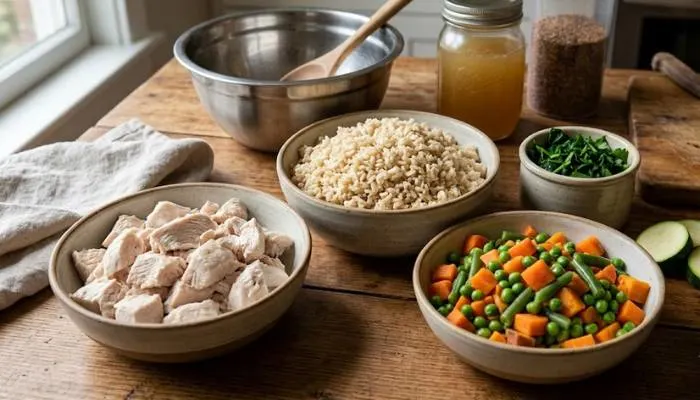
These are the recipes I use. They are simple. They are balanced when you add the right supplements. And my dog actually eats them.
1. Chicken and Rice (The Gentle Starter)
This is the one I started with. It is easy on the stomach. Good for dogs with sensitive digestion.
What you need:
- 2 cups cooked chicken breast, shredded
- 1 cup cooked brown rice
- 1/2 cup cooked carrots, chopped
- 1/2 cup cooked peas
- 1 tablespoon fish oil
- 1/2 teaspoon turmeric
What to do:
Boil the chicken until fully cooked. Shred it. Cook the rice. Steam the veggies until soft. Mix everything together. Add the fish oil and turmeric. Let it cool before serving.
Why it works:
Lean protein. Good fiber. Turmeric helps with inflammation. Fish oil gives omega-3s for a healthy coat .
2. Beef and Sweet Potato (For Active Dogs)
This one is heartier. More calories. Good for dogs that burn a lot of energy.
What you need:
- 1 pound lean ground beef, cooked and drained
- 1 cup cooked sweet potato, mashed
- 1/2 cup steamed green beans
- 1/2 cup steamed spinach
- 1 tablespoon flaxseed oil
- 1/2 teaspoon ground eggshell powder (for calcium)
What to do:
Cook the beef. Drain the fat. Steam the veggies. Mash the sweet potato. Mix it all together. Add the flaxseed oil and eggshell powder. Cool before serving.
Why it works:
High protein. Good fats. The eggshell powder adds calcium, which is missing from most homemade diets .
3. Salmon and Quinoa (For Skin and Coat)
This is my dog's favorite. He goes crazy for it.
What you need:
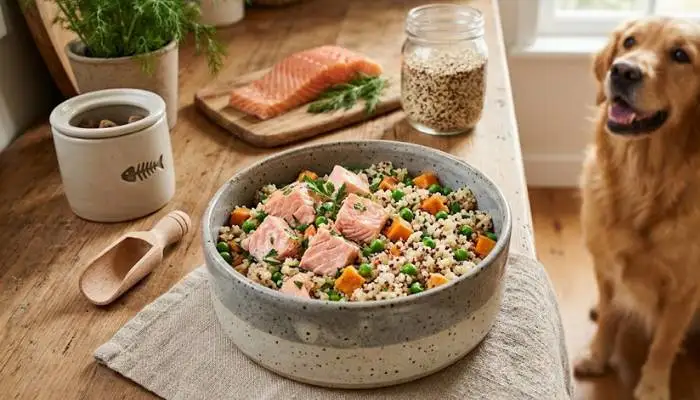
- 2 cups cooked salmon, bones removed
- 1 cup cooked quinoa
- 1/2 cup steamed zucchini, chopped
- 1/2 cup steamed carrots, chopped
- 1 tablespoon coconut oil
- 1 teaspoon dried kelp (for minerals)
What to do:
Cook the salmon. Remove all bones. Cook the quinoa. Steam the veggies. Mix everything together. Add the coconut oil and kelp. Cool and serve.
Why it works:
Salmon is full of omega-3s. Quinoa is a complete protein. Kelp adds iodine and other minerals .
Vet Approved Homemade Dog Food Recipes: What That Actually Means
- I see "vet approved" on so many websites. Here is the truth. A vet can approve a recipe. But that does not mean it is right for your dog. Your vet knows your dog. They know their health. Their weight. Their issues.
- The recipes above are a starting point. But you need to adjust them. A puppy needs different nutrition than a senior dog. A dog with kidney issues needs different food than a healthy dog .
- So use these recipes. But talk to your vet first. Show them what you are making. Ask what needs to change. That is what "vet approved" should actually mean.
Nutritionally Complete Homemade Dog Food Recipes: The Missing Piece
Here is the part that scares me. A study found that most homemade dog food recipes online are deficient in at least one key nutrient . That is a big deal.
What does "complete" mean? It means the food has everything your dog needs. Protein. Fat. Carbohydrates. Vitamins. Minerals. In the right amounts. In the right balance.
The recipes I shared are a base. But they are not complete on their own. You need to add supplements. That is not optional. It is required.
A balanced homemade diet needs:
- A calcium source (eggshell powder, bone meal, or a commercial supplement)
- Essential fatty acids (fish oil or flaxseed oil)
- A multivitamin or mineral mix designed for homemade diets
Without these, your dog is missing things. And over time, that causes problems.
Best Supplements for Homemade Dog Food
This is the part most people skip. Do not skip it.
Calcium
Meat has almost no calcium. If you do not add it, your dog's bones suffer. Use ground eggshell powder. Or a commercial calcium supplement. Or bone meal. One half teaspoon per pound of food is a good starting point .
Fish Oil
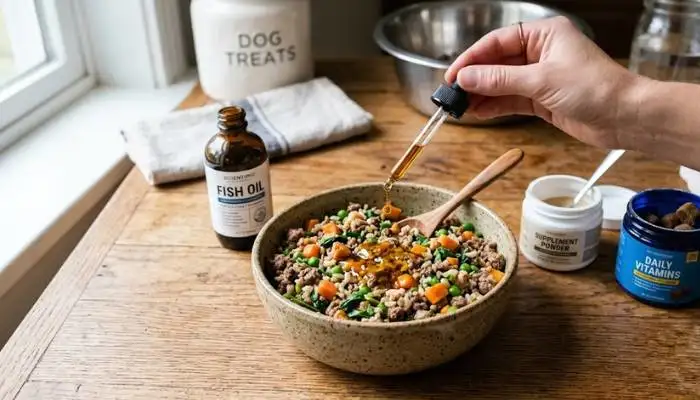
Omega-3s. For skin. For coat. For joints. For the heart. Most homemade diets are low in omega-3s. Fish oil fixes that. One thousand milligrams per thirty to forty pounds of body weight daily .
Multivitamin or Mineral Mix
This is the safety net. It fills the gaps. A good one has zinc, iron, vitamin E, and B vitamins. Look for one made specifically for homemade diets. Balance IT is one option vets recommend . There are others. Ask your vet what they trust.
Zinc
Many homemade diets are low in zinc. Zinc supports the immune system and skin. If you are not using a multivitamin with zinc, you need a separate source. Zinc picolinate or zinc gluconate absorb better than zinc oxide .
Kelp or Iodine
A little kelp powder adds iodine. Iodine supports the thyroid. It is a small thing but it matters .
Nutritionally Complete Homemade Dog Food Recipes PDF: Where to Find Reliable Ones
I get asked this a lot. People want a PDF. Something they can print and keep in the kitchen.
- Here is the honest answer. There are good ones. But you have to be careful. Anyone can make a PDF. Not everyone knows what they are doing.
- The MSPCA-Angell has a generic homemade diet PDF. It is from 2007 but the basics still apply. It includes supplement recommendations and feeding charts . It is a solid starting point.
- JustFoodForDogs has recipes with nutrient blends. Their recipes are formulated to meet AAFCO standards. They sell the nutrient blends separately .
- The best thing you can do is ask your vet for a recipe. Many vet nutritionists will create a custom recipe for your dog. It costs money. But it is tailored to your dog. That is better than any generic PDF.
You May Read Also: Best Protein Puppy Food for Active Breeds and Healthy Growth
How Much to Feed?
This is where people get confused. How much is enough?
- Start with the calorie count. A typical adult dog needs about thirty calories per pound of body weight per day . So a thirty pound dog needs about nine hundred calories a day.
- But that is just a starting point. Watch your dog. Are they gaining weight? Feed less. Losing weight? Feed more. Their body condition tells you what to do .
- Weigh your dog every two weeks. Adjust as needed. That is the only way to know if you are getting it right.
What Not to Put in Homemade Dog Food?
I should not have to say this. But I will.
- No onions. No garlic. They damage red blood cells. Even small amounts .
- No grapes or raisins. Kidney failure. Even one can be deadly.
- No chocolate. Toxic. Can be fatal.
- No xylitol. Found in sugar-free gum and some peanut butters. Deadly .
- No cooked bones. They splinter. They cause internal damage.
Keep it simple. Meat. Vegetables. Grains. Supplements. That is it.
My Final Piece of Honest Advice
- Cooking for your dog is a commitment. It takes time. It takes planning. It takes money, honestly.
- But I would not go back to kibble. My dog is healthier. His coat is shinier. He has more energy. He actually gets excited about meals now.
- The key is balance. Do not just throw meat in a bowl. Add the calcium. Add the fish oil. Add the multivitamin. Talk to your vet. Adjust as you go.
- And do not be afraid to mess up. I did. My first few batches were probably missing things. But I learned. You will too.
- Your dog deserves good food. You can give that to them. Just do it right.
Quick Recap
- Homemade food needs supplements. Calcium, fish oil, and a multivitamin are not optional.
- Use recipes with meat, vegetables, and grains. Chicken and rice. Beef and sweet potato. Salmon and quinoa.
- Talk to your vet before switching. Every dog is different.
- Avoid toxic foods. No onions, garlic, grapes, chocolate, or xylitol.
- Start with thirty calories per pound of body weight. Adjust based on your dog's condition.
- Look for reliable PDFs. Or ask your vet for a custom recipe.
FAQs
1. Can I just feed chicken and rice every day?
No. I did this for a week and my vet caught it. Said my dog was missing calcium. Chicken and rice is fine when they are sick. But not forever. Their bones need calcium. Their body needs vitamins. So add supplements. Or talk to your vet first.
2. Do I really need supplements? Sounds like a scam.
It is not a scam. I thought the same thing. Then I learned meat has almost no calcium. None. So if you skip calcium, your dog's bones get weak. Fish oil too. Multivitamins too. These are not extras. They are required. Skip them and your dog pays the price later.
3. How do I know my food is actually balanced?
Honestly? You probably do not. I did not. That is why you ask your vet. Show them your recipe. They will tell you what is missing. Some vets even make a custom recipe just for your dog. That is the safest way.
4. Is homemade food cheaper than kibble?
I thought it would be. It is not. Good meat costs money. Supplements cost money. It adds up fast. But my dog is healthier. Coat is shinier. More energy. For me it is worth it. But do not expect to save money.
5. Can I cook once and freeze it?
Yes. I do this every Sunday. Cook a big batch. Portion it out. Freeze half. It lasts about three months. Thaw in the fridge overnight. Warm it a little before serving. Easy.
6. My dog has allergies. Can I still cook for him?
Yes. That is why a lot of people start cooking. You control everything. No mystery fillers. No hidden allergens. Just talk to your vet first. They help you pick proteins and carbs that work for your dog.
7. My dog will not eat the homemade food. Now what?
Mine did this too. He was used to kibble. So I mixed a little kibble in at first. Then less and less. Now he loves it. Warm the food slightly. Smells better. Do not give up after one try. Give it a week.