My puppy was a tiny tornado. He chewed everything. Barked at nothing. Ran laps around my coffee table at 2am. I could not take him outside because he was too young for walks. So I was stuck inside with a ball of chaos. I had to figure out indoor exercises for young puppies or lose my mind. I tried games. I made up obstacles. I used pillows and boxes and whatever I had.
Some things worked. Some did not. But I kept at it. Eventually my puppy calmed down. He stopped destroying things. He slept all night. I understand if you have a crazy puppy, and if you are trapped inside. I have been there. Here's some tips on what helped me.
Why Indoor Exercise Matters for Puppies?
Puppies have a lot of energy. They need to burn it off. If they do not, they get bored. Bored puppies chew things. They bark. They get into trouble.
But here is the thing. Young puppies cannot go for long walks. Their bones are still growing. Too much exercise can hurt their joints. And they have not had all their shots yet. So outside is risky. That means you need to exercise them indoors. It keeps them safe. It keeps them healthy. And it saves your furniture.
Indoor exercise is also great for bonding. You play with your puppy. You teach them things. You build trust. That is just as important as physical exercise.
Read More: Best Indoor Workouts for Dogs: Keep Your Dog Happy and Healthy
Best Indoor Exercises for Young Puppies
Here are the exercises I used with my puppy. They work. They are simple. And you can do them in a small space.
Fetch in the Hallway
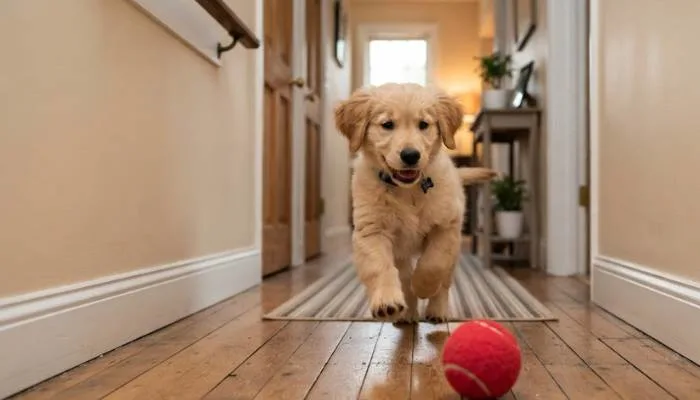
- This is the easiest one. Find a hallway. Toss a soft toy down the hall. Your puppy chases it. They bring it back. You toss it again.
- Start with short throws. Puppies have short attention spans. Keep it fun. Keep it short.
- If your puppy does not bring the toy back, that is fine. Just go get it yourself. They will learn over time.
Tug of War
- Puppies love tug. Get a rope toy or a soft cloth. Let your puppy grab one end. You grab the other. Gently pull back and forth.
- Keep it gentle. Puppies have baby teeth. They are sensitive. Do not yank hard. Let them win sometimes. That keeps them interested.
- Tug is great for building muscle. It works their neck, shoulders, and legs. Good for overall strength.
Hide and Seek
- This one is fun. Hide somewhere in the house. Call your puppy's name. When they find you, give them a treat.
- Start easy. Hide behind a door. Let them see you go there. As they get better, hide in harder places.
- This works their brain too. They have to think. They have to use their nose. Mental exercise tires them out just as much as physical exercise.
Chase the Bubbles
- Get a bottle of dog-safe bubbles. Blow them in the air. Your puppy chases them. They pop them with their nose.
- My puppy went crazy for bubbles. He would jump and run and spin. It burned so much energy. And it was hilarious to watch.
- Make sure the bubbles are non-toxic. Regular bubbles can upset their stomach. Get ones made for dogs.
Obstacle Course
- Set up a simple course in your living room. Use pillows. Use chairs. Use boxes. Have your puppy go over, under, and around things.
- Start simple. One or two obstacles. Guide your puppy through with treats. As they get better, make it harder.
- This builds coordination. It builds confidence. And it burns a lot of energy.
Stair Climbing
- If you have stairs, use them. Toss a toy up a few steps. Let your puppy climb up to get it. Toss it back down. Let them come down.
- Puppies love stairs. It is exciting for them. And it is great exercise for their legs.
- Be careful with young puppies. Too many stairs can hurt their joints. Start with just a few steps. Work up slowly.
Chase the Laser Pointer
Dogs love chasing laser pointers. Shine it on the floor. Move it around. Your puppy chases it.
But be careful. Some dogs get obsessed. They keep looking for the dot even after you stop. Use it sparingly. And always end with a treat so they know the game is over.
Indoor Dog Exercise Equipment
You do not need fancy equipment. But some things help.
Puzzle Toys
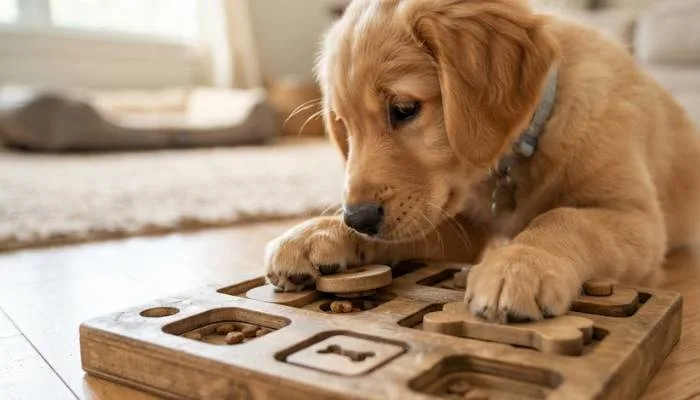
These are great for mental exercise. Your puppy has to figure out how to get the treat out. It keeps them busy. It tires them out.
There are different kinds. Sliders. Spinners. Treat balls. Start with easy ones. Work up to harder ones.
Tunnels
Collapsible tunnels are fun. Puppies love running through them. You can buy one or make one with boxes and blankets.
Agility Equipment
You can buy small jumps and weave poles. They are not expensive. And they are a lot of fun. Your puppy learns to jump and weave. Great for coordination and muscle building.
Flirt Pole
- This is a pole with a toy on the end. You swing it around. Your puppy chases it. It is like fishing but for dogs.
- My puppy loved his flirt pole. He would chase it for hours if I let him. Great for burning energy in a small space.
Treat Dispensing Ball
This is a ball that drops treats as it rolls. Your puppy pushes it around. Treats come out. It keeps them moving and thinking at the same time.
Dog Exercise for Muscle
Puppies need muscle development too. Here is what helps.
Sit to Stand
- Have your puppy sit. Then have them stand. Then sit again. Repeat. This works their leg muscles.
- Use treats as rewards. Do it a few times a day. Short sessions are best.
Balance Work
- Have your puppy stand on a cushion or a pillow. They have to balance. This works their core muscles.
- Start with something firm. Move to softer surfaces as they get better.
Controlled Walking
Walk your puppy around the house. Make them walk slowly. This builds muscle control. It is different from running. It is more controlled.
Tug Strengthens Muscles
As I mentioned earlier, tug works the neck, shoulders, and legs. It is one of the best muscle builders for puppies.
How Much Exercise Does a Puppy Need?
- Puppies do not need as much as adult dogs. Their bodies are growing. Too much can hurt them.
- The rule is this. Five minutes of exercise per month of age. Twice a day.
- So a two-month-old puppy needs ten minutes twice a day. That is it. Do not push for more.
- Watch your puppy. If they seem tired, stop. If they are still hyper, do a little more. Every puppy is different.
You May Also Read: Safest Chew Toys for Teething Puppies: Top Picks Guide
Signs Your Puppy Is Tired
Puppies do not always know when to stop. You have to watch for signs.
- They start biting more
- They get zoomies (running in circles)
- They stop listening to you
- They lay down and refuse to move
- They get whiny or grumpy
When you see these signs, stop exercising. Put them in their crate for a nap. A tired puppy needs rest.
What Not to Do with a Puppy?
I made these mistakes. Do not make them.
- Do not overdo it. Puppies get tired fast. Stop before they are exhausted. It is better to do short sessions often.
- Do not use heavy weights. Some people use weighted vests on puppies. Do not do this. It hurts their developing joints.
- Do not force them. If your puppy does not want to play, stop. Pushing them makes them hate exercise.
- Do not exercise after eating. Wait at least an hour after meals. Exercising on a full stomach can cause bloat. That is dangerous.
Making Exercise a Routine
- Puppies like routine. Do exercise at the same time every day. Morning and evening are good times.
- Start with a warm-up. A few gentle games. Then do the main exercise. Then cool down. A calm game or some cuddles.
- Keep it fun. The goal is not just exercise. The goal is bonding. Your puppy should enjoy the time with you.
My Favorite Indoor Exercise Routine
Here is what worked best for my puppy. I did this every day.
Morning session:
- Five minutes of fetch in the hallway
- Five minutes of tug
- A puzzle toy to wind down
Evening session:
- Five minutes of obstacle course
- Five minutes of hide and seek
- Cuddles and calm petting
This routine took about twenty minutes total. It was not much. But it made a huge difference.
One Final Piece of Honest Advice
I know how hard it is to have a puppy with too much energy. I have been there. I have felt that frustration.
But here is what I learned. It is not about tiring them out completely. It is about giving them an outlet. A way to burn their energy in a positive way.
The more exercise you give them, the better behaved they are. They chew less. They bark less. They sleep more and the best part? You bond with them. You build a relationship. That is what matters most.
So find what works for your puppy. Try different exercises. See what they like and do that. Your puppy will be happier and so will you.
FAQs
1. My puppy has too much energy but I cannot take him outside yet. What do I do?
I was stuck inside too. My vet said wait until shots were done. So we played fetch in the hallway. We did tug of war. We chased bubbles. I made obstacle courses with pillows. It worked. You just have to get creative with what you have at home.
2. How much exercise does a young puppy actually need?
Not as much as you think. I overdid it at first. Puppies only need about five minutes per month of age, twice a day. So a two month old needs ten minutes. That is it. Too much can hurt their joints. So keep it short.
3. My puppy gets bored of the same games. What should I do?
Switch it up. I rotated games. Fetch one day. Tug the next. Hide and seek after that. Puppies get bored just like kids do. New games keep them interested.
4. Is tug of war bad for puppies?
No. Just keep it gentle. Puppies have baby teeth. Do not pull hard. Let them win sometimes. That makes it fun for them. It is actually good for building muscle.
5. My puppy still has energy after playing. Now what?
Try brain games. I used puzzle toys. I hid treats around the house. Mental exercise tires them out faster than running sometimes. I learned that the hard way.